


Not a coastal city. Not the one everyone talks about. Just a place where your salary finally makes sense, your home has an actual backyard, and Monday morning doesn’t feel like a punishment.
Dallas.
If you’ve been quietly running the numbers — cost of living, job market, schools, quality of life — and something keeps pointing you south, this guide is going to confirm what you’re already suspecting. Living in Dallas in 2026 isn’t a compromise. For a growing number of Americans making the leap, it’s the smartest decision they’ve made in years.
At California Seattle Express, we specialize in long-distance moves from the West Coast and Pacific Northwest into Texas and beyond. We’ve watched this shift happen in real time — families from LA, professionals from Seattle, remote workers from San Francisco — all landing in Dallas and wondering why they waited. This guide is everything we’ve learned from being part of those moves, built into one honest, practical resource.
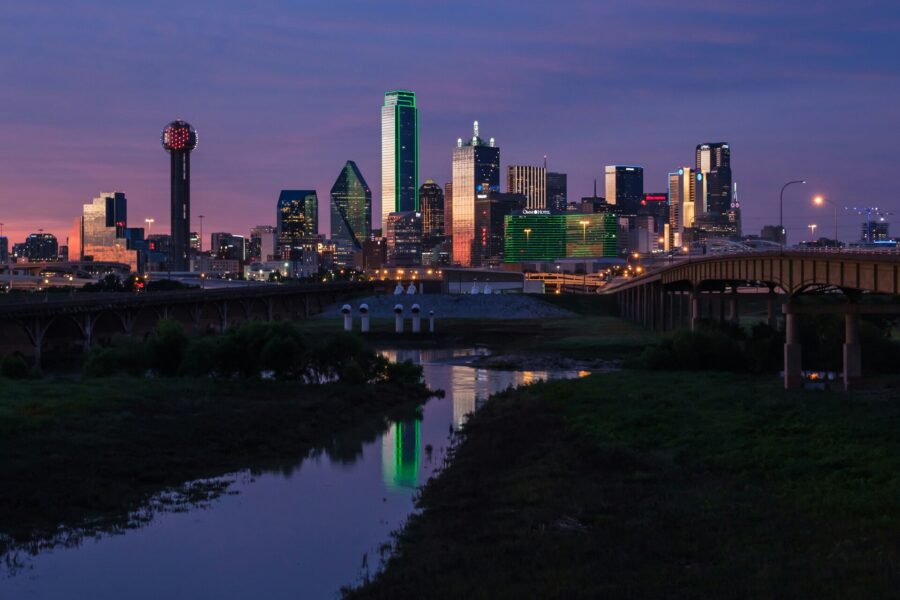
The Case for Dallas — And Why It’s Stronger Than Ever in 2026
Here’s something worth sitting with: Dallas-Fort Worth added more new residents in 2025 than almost any other metro in the United States. That’s not hype. That’s a signal. When that many people vote with their moving trucks, there’s something real driving it.
What’s drawing them isn’t one thing — it’s a combination that’s genuinely hard to find elsewhere:
- Zero state income tax. Texas doesn’t tax personal income. On a $85,000 salary, that can mean $4,000–$6,500 more in your pocket every year compared to California or Washington state — without changing anything else about how you live.
- A housing market that still makes sense. The median home price in the Dallas metro sits around $400,000–$420,000 in 2026. That’s real square footage, real neighborhoods, real value — not a bidding war for a 700-square-foot condo.
- An economy that isn’t built on one thing. Tech, finance, healthcare, logistics, aerospace — they all run strong here at the same time. That kind of diversification means stability, not volatility.
- 285 sunny days a year. The winters are mild. The springs are genuinely beautiful. Yes, the summers are intense — we’ll get to that — but the overall climate calendar is a net positive for most people.
- DFW International Airport. One of the most connected air hubs in the world. Wherever you need to be, there’s almost always a direct flight.
Relocation to Dallas: What the Housing Market Actually Looks Like Right Now
The frantic pace of the early 2020s has settled. Inventory is up, competition has eased, and people moving to Dallas in 2026 have more options and more negotiating room than the market has offered in years. That’s genuinely good news if you’re timing a relocation.
If You’re Planning to Rent First
Smart move — especially if you’re coming from out of state. Dallas is enormous (over 385 square miles), and where you land matters enormously for your daily life. Renting for 6–12 months before buying gives you first-hand knowledge no amount of Zillow browsing can replicate.
What you’re looking at in 2026:
| Situation | Monthly Cost |
|---|---|
| Studio, central Dallas | $1,200 – $1,650 |
| 1-bedroom in Uptown or Knox-Henderson | $1,700 – $2,300 |
| 2-bedroom, urban neighborhoods | $2,100 – $2,900 |
| 2-bedroom, suburbs (Plano, Richardson, Garland) | $1,400 – $1,850 |
If You’re Ready to Buy
| Area | Price Range | What It Gets You |
|---|---|---|
| Frisco / Plano | $490,000 – $570,000 | Top schools, newer construction, strong demand |
| Garland / Mesquite / DeSoto | $275,000 – $355,000 | Solid entry-level, real community feel |
| Highland Park / Preston Hollow | $1,000,000+ | Dallas's most prestigious corridor |
| Metro-wide median | ~$400,000 – $420,000 | Broad range of options at every price point |
One practical note from experience: if you’re arriving between May and September, lock in your rental before you land. Good units in desirable neighborhoods don’t sit — and trying to apartment-hunt remotely during peak season adds unnecessary stress to an already full plate.
Best Neighborhoods in Dallas: A Honest Match Guide
You want urban energy without Manhattan prices → Uptown & Victory Park
Walkable by Dallas standards, which in Texas is genuinely saying something. Restaurants, bars, and coffee shops within a short walk. High-rise apartments, active street life, and a social scene that makes meeting people easy. Rents are among the highest in the city — but so is the convenience factor.
You want personality, not polish → Bishop Arts District & Oak Cliff
This is the part of Dallas that feels like it wasn’t designed by a committee. Independent restaurants with actual points of view, local art galleries, vintage shops, and a neighborhood culture built over decades rather than developed overnight. Popular with creatives, chefs, artists, and anyone who finds chain-store urbanism exhausting.
You want space, nature, and a quieter pace → Lake Highlands & White Rock Lake
White Rock Lake is a 1,015-acre urban park sitting right inside the city — trails, kayaking, open water, weekend farmers markets. The surrounding neighborhood is established, genuinely affordable compared to trendier zip codes, and full of the kind of mature trees and quiet streets that newer developments simply can’t replicate. Consistently underrated.
Schools are non-negotiable → The Park Cities (Highland Park / University Park)
Highland Park and University Park are independent municipalities — meaning their own city services, their own infrastructure, and their own school districts, which consistently rank among the strongest in the entire state of Texas. The price point reflects the demand, but for families where education is the priority, this corridor delivers.
You want suburban comfort done right → Frisco, Plano & Allen
These northern suburbs aren’t just “nice” — they regularly appear on national best-places-to-live rankings for a reason. Plano is home to several Fortune 500 campuses. Frisco has grown rapidly while somehow maintaining a livable, organized feel. Allen offers a smaller-town character without sacrificing access. For families relocating from out of state, this corridor is consistently the first choice.
You want value without giving up access → Garland, Richardson & Mesquite
Significantly more affordable than anything closer to the urban core, while staying within 30–45 minutes of downtown Dallas. Richardson sits adjacent to the old Telecom Corridor — strong for tech workers who want suburban practicality without suburban isolation. These communities have real diversity, real character, and real value.
Everyday Expenses in Dallas: The Full Cost Picture
Being “affordable” means different things in different cities. Here’s what it actually costs to live in Dallas on a month-to-month basis:
| Expense | Estimated Monthly Cost |
|---|---|
| Rent — 1-bedroom, mid-range area | $1,400 – $1,900 |
| Groceries & household staples | $350 – $500 |
| Utilities — budget higher June–Sept | $180 – $280 |
| Car, fuel, parking | $300 – $500 |
| Dining out & weekend plans | $250 – $450 |
| Health insurance (employer plan) | $150 – $400 |
| Realistic monthly total | $2,600 - $4,000 |
Things that catch newcomers off guard:
- The electricity bill in summer. Running air conditioning around the clock from June through September isn’t optional in Texas — it’s how you survive. Budget an extra $100–$150/month during peak heat months. Your first July bill will be memorable.
- Sales tax at 8.25%. If you’re coming from Oregon or Montana with no sales tax, this registers immediately. Factor it into your daily budget.
- Car insurance. Dallas averages $1,600–$2,000/year — above the national average, due partly to storm risk and traffic density. Shop around before you arrive.
- DART monthly pass is $96 if your route works — but most residents drive. Plan for a car.
Residential Relocation Service
Feeling rushed about your long distance move? We can help you organize and budget so you have everything in place.
Car Shipping Services
We can ship your vehicles using the best freight options available. Your car will be moved safely and securely and arrive as planned.
Packing Services
Our professional packers have methods and techniques to ensure all your items are intact during and after the move.
Jobs & Economy: Is the Dallas Market as Strong as People Say?
The short answer: yes — and the data backs it up.
DFW unemployment sits around 3.5% in 2026, consistently among the lowest of any major U.S. metro. More importantly, the economy isn’t dependent on any single sector. That diversification is what gives Dallas its stability — when one industry slows, the others don’t follow.
Who’s hiring and where the real opportunities sit:
- Technology: AT&T’s global headquarters is in Dallas. Texas Instruments, Nokia, and Ericsson all have significant operations here. Richardson’s Telecom Corridor continues to grow, and a startup ecosystem is building momentum across the metro.
- Finance: Goldman Sachs, JPMorgan Chase, Bank of America, and Charles Schwab — which moved its national headquarters to DFW in 2020 — all operate at scale here. Dallas has quietly become one of the most important financial centers in the country.
- Healthcare: UT Southwestern Medical Center is a world-class academic institution. Baylor Scott & White and Texas Health Resources together employ tens of thousands across the region.
- Logistics: DFW Airport and its surrounding distribution infrastructure make this one of the strongest supply chain markets in the United States. Amazon, FedEx, and UPS all run major operations here.
- Aerospace & Defense: Lockheed Martin’s largest manufacturing facility sits in nearby Fort Worth — a significant employer for the broader metro.
If you’re relocating with a job in hand, you’re in a strong position. If you’re moving first and job hunting after — arrive with 3–6 months of savings, get active on LinkedIn before your boxes are unpacked, and connect with local professional associations early. The market is accessible, but preparation still wins.
Lifestyle: The Parts Nobody Puts in the Brochure
The numbers bring people to Dallas. What they find when they get here is what makes them stay.
Your sense of space shifts permanently. After years in a dense coastal city, Dallas feels like someone turned the volume down. Apartments are bigger. Parking exists. Roads breathe. The city moves with ambition but without the constant pressure of scarcity — of housing, of space, of time.
You’ll build a social life faster than you expect. Dallas is, at its core, a city of people who moved here from somewhere else. Especially in the under-40 professional demographic, transplants aren’t the exception — they’re the majority. Newcomer groups, professional networking events, sports leagues, and neighborhood associations are active and welcoming. Most people who move to Dallas report a stronger social foundation within six months than they had after years in their previous city. That’s not an accident — it’s the character of the place.

The arts scene will genuinely surprise you. The Dallas Arts District covers 19 contiguous city blocks — the largest urban arts district in the entire United States. Within it: the Dallas Museum of Art (free general admission), the Nasher Sculpture Center, the AT&T Performing Arts Center, and the Meyerson Symphony Center. This is not a city that treats culture as an afterthought.
Sports are how this city connects. The Cowboys, Mavericks, Rangers, and Stars all call DFW home. Game days aren’t just entertainment — they’re a shared civic experience. For newcomers, they’re one of the fastest, most natural ways to meet people and feel like you belong somewhere.
Summers require a real adjustment period. Give yourself one full summer before you decide how you feel about the heat. Most people who’ve lived in Dallas for more than a year will tell you the same thing: you adapt, you find your rhythm, and it becomes background noise. But that first July will test you — plan outdoor activities for early morning or after sunset, and make peace with the air conditioning bill.
Moving Services and What’s Actually Worth Paying For
A long-distance move is a different challenge than anything local — and the sooner you treat it that way, the smoother it goes. Distance raises the stakes on every decision: how things are packed, how they’re loaded, how the timing is managed. At California Seattle Express, we handle the full picture of your relocation, not just the transport.
Full packing and unpacking. What holds up fine on a 20-minute local move can arrive damaged after 1,500 miles if it wasn’t packed with that distance in mind. Our crew packs properly — protecting furniture, wrapping fragile items, and using custom crating for anything high-value, oversized, or irreplaceable. Artwork, antiques, instruments — if it matters to you, we treat it accordingly. And on the other end, we unpack and place, so your new home is functional from day one rather than a maze of unmarked boxes.

Partial packing. Not everyone wants the full-service package, and that’s completely fine. If you’d rather handle most of it yourself but want professionals to take care of the kitchen, the fragile items, or the awkward furniture — we can do exactly that. You stay in control, we handle the parts that carry the most risk.
Storage solutions. Lease end dates, closing delays, renovation timelines — move-out and move-in dates don’t always line up, and that gap can create real stress. If you need days or weeks between leaving your current home and moving into your Dallas one, your belongings stay secure with us in the interim. No last-minute scramble for a storage unit.
Vehicle transport. For moves over 1,000 miles, shipping your car almost always makes more sense than driving it. Open and enclosed carrier options are available depending on your vehicle — car shipping to Dallas typically runs $800–$1,500 based on origin and vehicle type.
When you bundle everything through California Seattle Express — household move, packing, storage, and vehicle transport — you get one team managing one timeline. No coordinating between multiple providers, no gaps in communication, no surprises on delivery day.
Ready to Stop Planning and Start Moving?
At some point, the research ends and the decision begins. Dallas has the job market, the affordability, the lifestyle, and the community. The question isn’t whether it’s the right move — for most people running the numbers honestly, it clearly is. The question is whether you’re ready to make it happen.
California Seattle Express is built for exactly this. Long-distance relocations from the West Coast and Pacific Northwest — handled by a team that’s made this journey hundreds of times, knows the routes, knows the timing, and knows how to get your life from one state to another without the chaos that so often comes with it.
Household moving. Vehicle transport. Packing services. One company, one plan, zero surprises.
Get your free quote today — and take the first concrete step toward Dallas.
FAQ
How much does a long-distance move to Dallas cost?
Most long-distance household moves to Dallas fall between $2,500 and $7,000, depending on distance, volume, and services needed. California Seattle Express provides binding estimates — the number you’re quoted is the number you pay. No last-minute additions on delivery day.
When is the best time to move to Dallas?
October through April is the ideal window — manageable weather, lower moving rates than peak season, and time to settle in before summer. If you’re moving May through September, book early. Routes into DFW during peak season fill up well in advance.
How long does a long-distance move take?
Most long-distance household moves arrive within 4–10 business days of loading, depending on origin point and shipment size. California Seattle Express provides a clear delivery window upfront and keeps you informed throughout — no guessing, no radio silence.
Is Dallas safe?
Safety in Dallas — as in any large city — varies significantly by neighborhood. Areas like Frisco, Plano, Highland Park, and Lake Highlands consistently rank among the safest in the region. Researching specific neighborhoods before committing to an address makes an enormous difference. The most popular relocation destinations for out-of-state movers are well within safe, established communities.